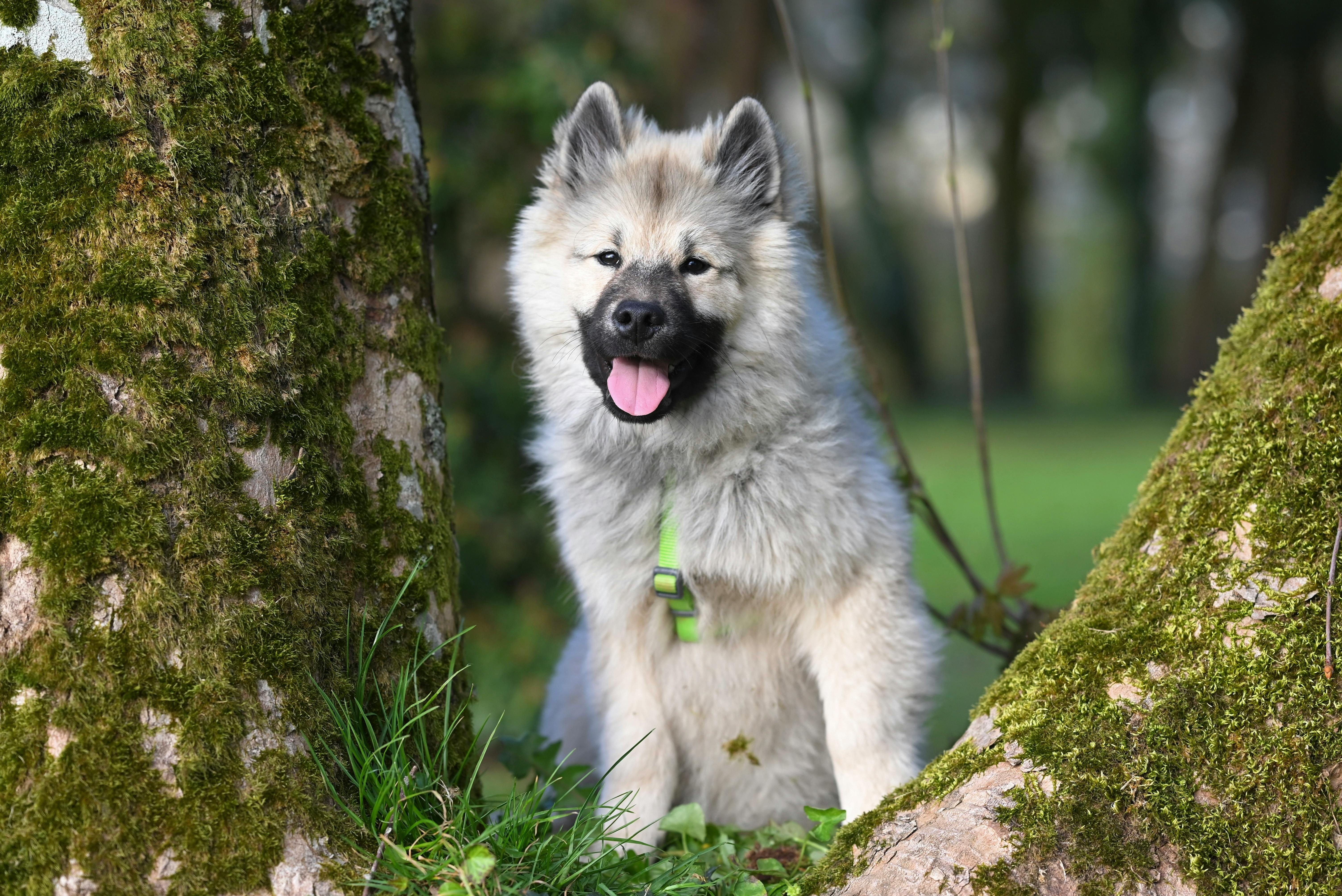
Some time in early September it flips. You head out after work and it is already going dark, the forest floor is suddenly covered in things your dog desperately wants to eat, and there are gunshots in the woods. Most of it is harmless. Some of it is not. And one of the rules that almost every dog owner has filed wrong in their head is precisely an autumn rule.
This season check walks through what changes for you and your dog between September and November in this canton. The tick-box list is at the end.
The leash question: what actually applies in autumn
The usual assumption goes: hunting season, therefore leash. In Canton Zurich that is not correct.
The cantonal leash obligation in the forest and at the forest edge runs from 1 April to 31 July. It is a Brut- und Setzzeit measure, meaning it exists for the breeding and fawning season in spring and early summer. It does not apply in September, October or November. That is stated in the Canton of Zurich information sheet (Veterinäramt together with the Fischerei- und Jagdverwaltung, 2023 edition), and the statutory basis is § 11 Abs. 1 lit. e of the Hundegesetz (LS 554.5) and § 41 of the Jagdgesetz (LS 5447). Both of those documents exist in German only.
A few details from the same sheet that very few owners know:
- The Waldrand, the forest edge, is legally defined as the strip up to 50 metres from the forest. That is wider than most people assume.
- A violation is an Ordnungsbusse, a fixed penalty, of CHF 60. The cantonal fixed-penalty ordinance lists the offence with the date window and the amount written into the same line.
- Leash length is not regulated. A long line or Schleppleine therefore satisfies the obligation.
- Enforcement sits with the police, the Wildhüter (game wardens), the hunting-district supervision, and the rangers of the nature-reserve supervision.
- Exemptions cover hunting, rescue and service dogs while deployed or in the training required for deployment, plus securely fenced areas such as dog training grounds in or beside the forest.
Now the second half, which matters just as much. The canton writes, in the same document, what applies outside that window:
That is not a formality. The obligation ends on 31 July. The responsibility does not. If your dog does not recall reliably in the forest, or switches on to deer, the lead is exactly as correct in September as it was in May. The difference is that you are now the one deciding.
What applies year round: the Wildschongebiete
Independently of the forest window, Canton Zurich has areas with their own rules. Under § 56 of the cantonal hunting ordinance, the Tössstock area, the Neeracherried, and Lake Zurich, the Greifensee and the Pfäffikersee are kantonale Wildschongebiete, cantonal wildlife protection areas. § 55 Abs. 4 allows the canton to impose a leash requirement in them, and municipalities hold the same power for their communal protection areas.
The Neeracherried, Pfäffikersee and Greifensee are additionally water and migratory bird reserves of national importance. They carry a Weggebot, an obligation to stay on marked paths, and a leash requirement for dogs, and rangers patrol them. At the Greifensee, the reed zones and everywhere signposted carry a year-round leash obligation.
Autumn is exactly when this matters most, because it is migration and staging season. These reserves exist for birds refuelling before they continue south. A dog crashing through the reed edge costs them energy they need for a thousand kilometres.
Sihlwald: its own rules, all year
Wildnispark Zürich Sihlwald runs its own regime, and it does not switch off on 1 August. The park puts it warmly and unambiguously: "Hunde sind an der Leine willkommen." Dogs are welcome on the lead.
The park is split into two zones. In the Naturerlebniszone, the nature discovery zone, you may leave the trail, dogs are welcome on the lead, and grilling is allowed only at marked fire places. In the Kernzone, the core zone, there is a strict obligation to stay on the paths, fires are banned, and plants and mushrooms may not be collected. Camping and drones are prohibited in the nature forest reserve.
Where exactly each zone begins is best settled on site: check the park map, read the signage. Anyone thinking "the leash period is over, so Sihlwald is open season" has it wrong.
The full picture for the whole canton is in our guide to the dog leash law in Zurich and Switzerland.
Hunting season: no law, but a good reason
Let us be explicit, because hardly anyone says it: Canton Zurich has no dog-specific rule tied to the hunting season. The dog provisions in the cantonal hunting ordinance govern hunting dogs, their training and their certification. For pet dogs, cantonal law contains exactly two leash instruments: the forest window from 1 April to 31 July, and the Wildschongebiete.
The instinct is still right, it is just attached to the wrong rule. Autumn is the busiest hunting period of the year. An extract from the hunting seasons under § 27 of the cantonal hunting ordinance:
| Species | Hunting season |
|---|---|
| Roe does and fawns | 1 September to 31 December |
| Roe bucks, yearling does, barren does | 2 May to 31 December |
| Red deer, chamois | 2 August to 31 December |
| Fallow and sika deer | 2 August to 31 January |
| Wild boar | 1 July to end of February |
| Fox | 16 June to end of February |
| Mallard, cormorant | 1 September to 31 January |
The arithmetic is uncomfortably neat: one month after the leash obligation expires, the season on roe does and fawns opens. The forest does not get quieter in autumn. It gets busier.
Then there are shooting hours. Under § 28 Abs. 1 of the hunting ordinance, shooting is permitted from one hour before sunrise until one hour after sunset. That is precisely the window most of us walk in during autumn: early before work, and again after.
The autumn forest floor
From September the ground is covered. For a dog who hoovers up everything, this is the riskiest season of the year. The evidence, though, does not say what most guides claim.
Horse chestnut: the genuinely dangerous one
The horse chestnut (Rosskastanie, Aesculus hippocastanum) contains triterpene saponins, chiefly aescin. The toxic parts are the seeds, at 3 to 10 per cent saponin content, plus bark, fresh shoots and leaves.
CliniTox, the toxicology database of the Institute of Veterinary Pharmacology and Toxicology at the University of Zurich, explicitly lists dogs and publishes a toxic dose of 1 to 2 seeds per animal. That is considerably lower than the reassuring figures circulating on pet blogs. Symptoms listed for dogs: vomiting, diarrhoea, painful abdomen, fluid loss, electrolyte disturbance, dilated pupils, drowsiness, ataxia. In severe cases, intestinal obstruction, muscle tremors, paralysis and potentially death. The CliniTox entries are German-language only.
So there are two risks at once, the toxic one and the mechanical one. A swallowed conker can obstruct the gut, and that is a surgical problem. If your dog eats one, call your vet. Do not wait for symptoms.
And the cultural footnote that matters in Zurich in autumn: horse chestnuts and Marroni are two different trees. The Marroni in the paper cone at the street stand is the sweet chestnut, and it is not the problem. The glossy conker lying in the park is. If you share a piece of Marroni with your dog: plain, unsalted, peeled, small, occasional. Not a meal.
Acorns: the correction
This is where it gets interesting, because nearly every guide says the same thing. Oaks contain tannins, which through metabolites such as pyrogallol can cause haemolysis. But CliniTox lists the affected species as cattle (most commonly), sheep, and less often pigs, goats and birds. Clinical descriptions are given for cattle and horses. Lethal doses are published for calf, rabbit and mouse. Dogs are not on the list, and no canine dose exists.
What does not follow from that is that acorns are safe for dogs. Absence from a species list is not a clearance. The realistic risks for a dog vacuuming up acorns are gastrointestinal upset and, above all, mechanical: choking and intestinal obstruction, particularly in small dogs and enthusiastic young ones. If your dog eats a quantity, or shows vomiting, repeated retching, lethargy or a tender abdomen, see your vet.
Beech mast sits in the same category. CliniTox rates it weakly toxic in general and strongly toxic for horses, and publishes a lethal dose for horses only. Dogs are not mentioned. So no panic, and equally no all-clear built on invented numbers.
Autumn crocus: the underrated one
Autumn crocus (Herbstzeitlose, Colchicum autumnale) flowers in meadows and pastures from late summer into autumn, which is exactly where many of us let the dog run. It contains colchicine, along with colchicoside and demecolcine. Every part of the plant is toxic, and the toxicity survives drying, storage and cooking, which also makes it a hay and meadow-cuttings issue.
CliniTox gives a lethal dose of 1 mg colchicine per kilogram of body weight for animal species generally, with severe diarrhoea from 0.25 mg/kg. The species discussed in detail are cattle, horses, pigs and lambs, and dogs are not separately profiled. Symptoms: salivation, vomiting, bloody diarrhoea, colic, circulatory failure, paralysis, respiratory depression. In short, a plant worth being able to recognise on an autumn meadow.
Mushrooms
Autumn is mushroom season, dogs occasionally eat them, and field identification is not something to improvise. The only sensible rule is not to guess. If your dog has eaten a mushroom, photograph it or take a piece with you and call the practice. In the Sihlwald core zone, collecting is prohibited anyway.
If something has happened
Your first call is your vet. Tox Info Suisse is reachable on 145, free, around the clock, and it does advise on poisoned animals, covering the level of risk and simple immediate measures. Its own primary instruction, though, is to contact your veterinary practice. Outside opening hours, 145 is a genuinely useful first assessment.
Visibility: it is dark at 17:00
By early November the sun sets in Zurich around 17:00, and around 16:35 at the winter solstice. With the clock change in late October, the after-work walk becomes a night walk more or less overnight. And as above, legal shooting hours run to one hour after sunset.
What actually helps:
- A light-up collar or harness on the dog, not only reflectors. Reflectors need a light source, and a cyclist on the lakeside path often has none pointing at your dog.
- Something reflective on you. Drivers see the human first.
- A head torch, so you can see what your dog is picking up off the ground. In autumn that is not a luxury.
- Lead on cycle paths, tram tracks and road crossings. The lakeside and Limmat promenades are commuter routes after dark. A black dog on black asphalt is effectively invisible to a bike.
- Adjust the route. For most dog and human teams, the forest after dark is a worse choice than a lit loop.
Wet, muddy, cold
Ticks do not stop in autumn. The Swiss season runs March to November according to the BAG, and ticks become active from around 7 °C. Dropping the post-walk check and the prophylaxis in September is the classic mistake. The detail is in our article on ticks in Switzerland.
Water turns into a chilling factor. Swiss lakes cool noticeably through autumn. Swimming stops being a way to cool down and becomes a way to get cold, especially for old, thin-coated or unwell dogs. If your dog insists: keep it short, towel them off, and do not leave them standing wet in the wind. The dog swimming spots are really a topic for the last warm days of September.
Coat or no coat? That is a case-by-case question, not a matter of principle. Small, thin-coated, very young, old or unwell dogs benefit. A healthy double-coated dog does not. The critical combination is not cold on its own, it is wet plus wind plus standing still, which is the situation where you are chatting to someone while the dog sits beside you getting chilled.
Paws. In autumn the issue is mud and wet, not yet road salt. Rinse and dry between the pads after a walk, and check for cracks and grass seeds. Road salt is a winter topic and gets its own treatment.
Where autumn is best in Canton Zurich
Kept short, because the full lists live elsewhere.
- Uetliberg. The best autumn recommendation in the canton, for a very specific reason: when fog sits over the city, the summit is often in sunshine while everything below is grey. T1 forest paths, reachable by S-Bahn and tram, no car needed. The full logistics are in our Uetliberg day trip with a dog.
- Pfäffikersee loop. Flat, well marked, with reed belts and migrating birds in autumn. Note that this is a Wildschongebiet and a bird reserve, so stay on the path, keep the lead on, and take the signage seriously.
- Greifensee shore. Same logic, same rules, easy to reach from the city. Year-round lead in the reed zones.
- City woodland and neighbourhood parks. For the dark months these are often the smarter choice than forest: lit, short loops, less wildlife.
Where to find water bowls, dog-friendly cafés and off-leash areas is on our community-run DogMap for Canton Zurich. For longer routes there is hiking with your dog in Canton Zurich and day trips with your dog, and for cafés and everyday spots, dog-friendly places in Zurich.
The autumn check at a glance
- Cantonal leash obligation in forest and forest edge: 1 April to 31 July. Not in force in autumn.
- Lead anyway if recall is unreliable or your dog has a hunting disposition. The canton calls this deciding on your own responsibility.
- In the § 56 Wildschongebiete (Lake Zurich, Greifensee, Pfäffikersee, Neeracherried, Tössstock area) a leash requirement can be imposed. The signage on site is what counts.
- In the bird reserves Neeracherried, Pfäffikersee and Greifensee, the stay-on-path rule and the leash requirement apply year round, and at the Greifensee additionally in the reed zones.
- Sihlwald: dogs on the lead only, core zone strictly on paths. All year.
- Mind the hunting season from September to December. Hear a drive hunt, lead on, leave the area.
- Shooting hours run to one hour after sunset. Plan the evening walk accordingly.
- Keep horse chestnuts away. Toxic from 1 to 2 seeds, plus the swallowing risk.
- Acorns and beech mast: no canine dose published, but gastrointestinal upset and obstruction are real. Do not let them eat them.
- Learn to recognise autumn crocus on meadows and avoid it.
- Mushrooms: do not guess, photograph, call the practice.
- Emergency: vet first, Tox Info Suisse 145 free and around the clock.
- Light-up collar, head torch, reflective clothing from the clock change onwards.
- Keep tick checks and prophylaxis running through November.
- After wet walks: dry the dog, rinse and check the paws.
The single sentence worth remembering: the leash obligation ends in summer, and the hunting only properly starts in autumn. Holding both facts at once is the whole trick.
New to Canton Zurich, or new to owning a dog here? The dog course quiz works out which courses and deadlines apply to you in about two minutes.